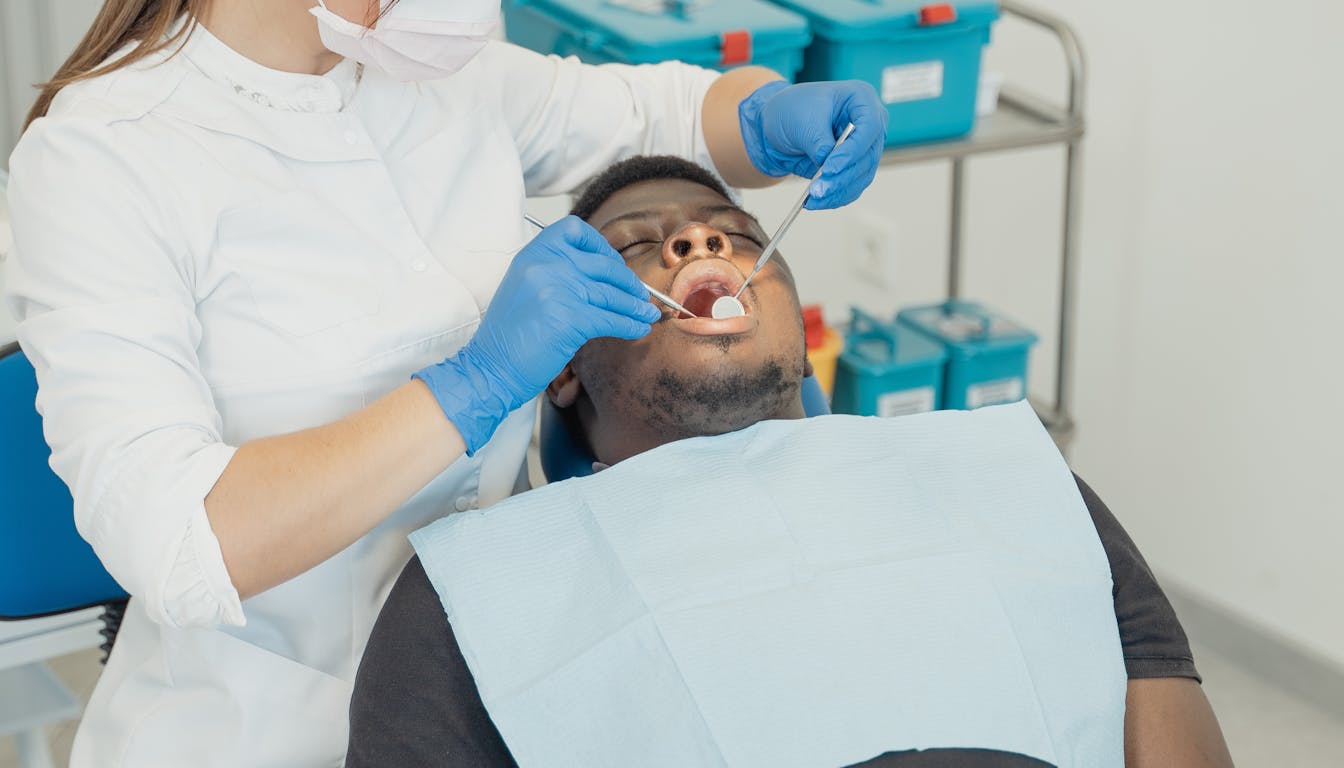
A single dental implant at FORME Dental runs $4,500 to $6,500, all in. That figure covers the surgical placement, the abutment, and the final custom crown. Bone grafting, sinus lifts and extractions are quoted separately, because not every patient needs them.
That is the whole answer. The rest of this page explains what sits behind the number — what it includes, what pushes it up, and what your insurance realistically pays — because in Midtown Manhattan you will see quotes from $3,000 to $12,000 for what sounds like the same procedure, and the difference is almost never the implant itself.
Single implant, Midtown Manhattan
$4,500 – $6,500
Implant, abutment and crown. Grafting and extractions quoted separately.
What that number actually covers
An implant is not one thing. It is three, usually presented as a single price:
- The implant. A titanium post placed into the jawbone, which takes the place of the tooth root.
- The abutment. The small connector that joins the post to the visible tooth.
- The crown. The part you actually see, made to match your surrounding teeth by a dental lab.
Our range also includes the consultation, the 3D scan used to plan placement around your nerve and sinus anatomy, and the follow-up visits through to the final fit. If a quote you receive elsewhere looks dramatically lower, the first question worth asking is which of those pieces it leaves out.
We restore. A surgeon places.
This is worth being direct about, because it affects your bill.
At FORME, Dr. Henry Fung and Dr. Tony Voong handle the restorative half of implant treatment — the planning, the abutment, the crown, the bite, and how the finished tooth looks next to the ones beside it. The surgical placement itself is performed by an oral surgeon or periodontist we work with.
We do it this way deliberately. Implant surgery is its own discipline, and outcomes are better in the hands of someone who performs it daily. What it means practically is that you may receive two bills rather than one, and the combined total is the number that matters. We will always give you the full picture before anything starts, not the restorative half in isolation.
What adds to the cost
Most of the variation between a $4,500 case and a $6,500 case — or a case that runs higher still — comes down to what has to happen before the implant can go in.
Bone grafting
When a tooth has been missing for a while, the bone that used to hold it begins to shrink. If there is not enough bone left to anchor an implant securely, it has to be rebuilt first. This is the single most common addition, and it is also why waiting after an extraction tends to make treatment more expensive rather than less.
Sinus lift
For implants in the upper back jaw, the sinus floor sometimes sits too low to allow adequate bone height. A sinus lift creates the space needed.
Extraction of the existing tooth
If the tooth being replaced is still in place, removing it is a separate step — though in some cases an implant can be placed at the same visit, which saves both time and money.
A temporary tooth during healing
An implant needs three to six months to fuse with the bone before the final crown goes on. If the gap is visible when you smile, most patients want something in place meanwhile.
What your insurance actually pays
Here is where most cost pages go vague, so we will not.
FORME Dental is in network with Aetna, Cigna, Delta Dental, Guardian, MetLife and UnitedHealthcare. That matters more than it sounds. When a practice is in network, your plan applies its contracted fee schedule. When it is out of network — which most concierge practices in Midtown are — your plan pays against a different, usually less favourable, rate, and you cover the gap.
What insurance will not do is cover an implant outright. Most dental plans carry an annual maximum, commonly between $1,500 and $2,500, and that ceiling is the real constraint rather than the coverage percentage. Many plans cover the crown at a meaningful share and treat the surgical placement differently, or not at all.
Two things follow from that, and both are worth knowing before you start:
- If your treatment spans a year boundary, sequencing the stages across two benefit years can effectively double what your plan contributes.
- Benefits do not roll over. If you have unused coverage and a tooth that needs attention, using it before December is simply better arithmetic.
We will run your benefits and give you a written estimate before treatment begins, so the number you are told is the number you pay. Our insurance and payment page lists the plans we participate with, and we offer in-house financing where it helps to spread the cost.
Why implants cost more in Manhattan
Partly the obvious reason: Midtown overhead is Midtown overhead. But the more meaningful drivers are the ones patients rarely see itemised — the implant system chosen, the laboratory that fabricates the crown, the imaging and planning that goes in before anyone touches a drill, and the amount of chair time the case is given.
We see one patient at a time. There is no second chair, and no schedule pressure pushing a case along faster than it should go. That model costs more to run, and we would rather be straightforward that it is part of what you are paying for.
The cheaper alternatives, honestly
An implant is not the only way to replace a missing tooth, and it is not always the right one.
A bridge generally costs less up front. The trade-off is that the healthy teeth on either side of the gap have to be reduced to support it, and bridges typically need replacing after roughly ten to fifteen years. A removable partial denture is cheaper again, and most patients find it markedly less comfortable.
The case for an implant is that it stands alone. It does not borrow strength from neighbouring teeth, and because it transmits force into the jaw the way a root does, it helps preserve the bone that would otherwise continue to shrink. Measured across twenty years rather than one, it is frequently the less expensive path.
If a bridge is genuinely the better answer for your situation, we will tell you so.
Common questions
How long does the whole process take?
Three to six months for most single implants, because the bone needs time to fuse to the post. If grafting is required first, add another three to six months before placement can happen.
Is it painful?
Placement is done under local anaesthetic, and most patients describe the recovery as more comparable to an extraction than to major surgery. Soreness for a few days is typical; sedation options are available if the prospect makes you anxious.
How long do implants last?
Long-term survival rates are high, and a well-maintained implant can last decades. The crown on top may need replacing at some point, much as a natural tooth might need a new crown. Implants are not immune to gum disease, so ongoing hygiene matters as much as it does for your own teeth.
Can I get it done in a day?
Same-day or immediate-load implants suit some cases, particularly where bone quality is good. They are not right for everyone, and whether you are a candidate is something the 3D scan answers rather than a website.
What we will not do
We do not run implant specials, and we do not quote a headline price that excludes half the treatment. If you have been given a number somewhere that seems remarkably low, bring the treatment plan with you and we will walk through what is and is not in it. That costs you nothing, and you are under no obligation to have the work done here.
Want a real number for your case?
A consultation includes a 3D scan, a written estimate, and your insurance run before anything begins.
Book a consultationOr call (347) 460-5603 · 575 Madison Avenue, Suite 1503
Written by Dr. Henry Fung, DDS, of FORME Dental in Midtown Manhattan. Prices reflect our fees as of August 2026 and are indicative, not a quote. This article is general information about treatment options and is not a substitute for an examination or personal dental advice. Every case differs, and the only reliable estimate is one made after seeing your teeth.