Gum disease is one of the most common health conditions in the country, and also one of the most overlooked. It rarely hurts in the early stages, it tends to come on quietly, and many people only learn they have it when a dentist points it out during a routine visit. Yet untreated gum disease is the leading cause of tooth loss in adults, and a growing body of research connects it to heart disease, diabetes, and other whole-body conditions.
The good news is that, caught early, gum disease is highly treatable, and in its earliest form it is often completely reversible. At our Midtown Manhattan practice, we see patients across the spectrum, from those with mild gum inflammation they did not know they had, to those who have lived with bleeding gums for years and assumed it was normal. It is not normal, and you do not have to live with it.
This guide walks through what gum disease actually is, how to recognize the warning signs, the stages it moves through, and the treatment options available to NYC patients. The aim is simple: to help you understand your gums well enough to protect them for life.
What Is Gum Disease, Exactly?
Gum disease, known clinically as periodontal disease, is an infection of the tissues that hold your teeth in place. It starts with plaque, the soft, sticky film of bacteria that constantly forms on your teeth. When plaque is not removed thoroughly through brushing and flossing, it hardens into tartar (also called calculus), which can only be removed by a dental professional.
The bacteria in plaque and tartar irritate the gums. Your body responds with inflammation, and over time that inflammation begins to break down the gum tissue and, eventually, the bone that supports your teeth. The process is gradual, which is exactly why it is so easy to miss. There is usually no sharp pain to warn you that something is wrong.
It helps to think of your gums as the foundation of a building. A beautiful set of teeth resting on an unhealthy foundation is always at risk. That is why periodontal health sits at the center of everything else in dentistry, including cosmetic work, implants, and routine restorations.
The Warning Signs You Should Not Ignore
Because early gum disease is largely painless, it pays to know the subtler signals. The most common early sign is bleeding when you brush or floss. Many people assume they are simply brushing too hard, but healthy gums do not bleed during normal cleaning. Bleeding is inflammation, and inflammation is the first step.
Other signs worth paying attention to include gums that look red, puffy, or swollen rather than a healthy firm pink. Persistent bad breath or a lingering bad taste in the mouth can point to bacteria building up below the gumline. You may also notice that your gums seem to be pulling away from your teeth, making the teeth look longer, or that your teeth have become sensitive near the gum.
In more advanced stages, teeth may feel slightly loose, your bite may feel different, or you may see small spaces opening up between teeth that were not there before. If you wear a partial denture, it might suddenly fit differently. Any of these changes is a good reason to schedule an evaluation rather than wait and hope it resolves on its own.
The Stages of Gum Disease
Periodontal disease is not a single condition but a progression. Understanding the stages helps explain why early action matters so much.
Gingivitis is the earliest and mildest stage. Here the inflammation is limited to the gum tissue itself. Your gums may bleed and look red or swollen, but the bone and the deeper structures that anchor your teeth are still intact. This is the stage every dentist hopes to catch, because gingivitis is reversible. With a professional cleaning and improved daily care, gums can return to full health within a few weeks.
Early periodontitis is the next stage, where the infection has begun to affect the bone. Small pockets form between the gum and the tooth as the gum starts to detach, and these pockets trap more bacteria. At this point some bone loss has occurred and cannot be regrown on its own, but progression can be halted with prompt treatment.
Moderate to advanced periodontitis involves deeper pockets, more significant bone loss, and increasing damage to the supporting structures. Teeth may loosen, shift, or become uncomfortable. Treatment becomes more involved at this stage, and the goal shifts from full reversal to stabilizing the disease and saving as many teeth as possible.
Why Gum Health Matters Beyond Your Mouth
One of the most important shifts in modern dentistry has been the growing understanding that the mouth is not separate from the rest of the body. The chronic inflammation of periodontal disease does not stay neatly contained in the gums.
Research has linked moderate and advanced gum disease to a higher risk of cardiovascular disease, and there is a well-documented two-way relationship with diabetes: gum disease can make blood sugar harder to control, and poorly controlled blood sugar makes gum disease worse. Studies have also explored connections to respiratory conditions, certain pregnancy complications, and more. For busy New Yorkers juggling demanding schedules, this is a meaningful reminder that caring for your gums is part of caring for your overall health, not a cosmetic afterthought.
How Gum Disease Is Diagnosed
Diagnosis is straightforward and painless. During a periodontal evaluation, we gently measure the depth of the small pockets between your gums and teeth using a thin instrument marked in millimeters. Healthy pockets are typically one to three millimeters deep. Deeper readings suggest the gum has detached and that disease may be present.
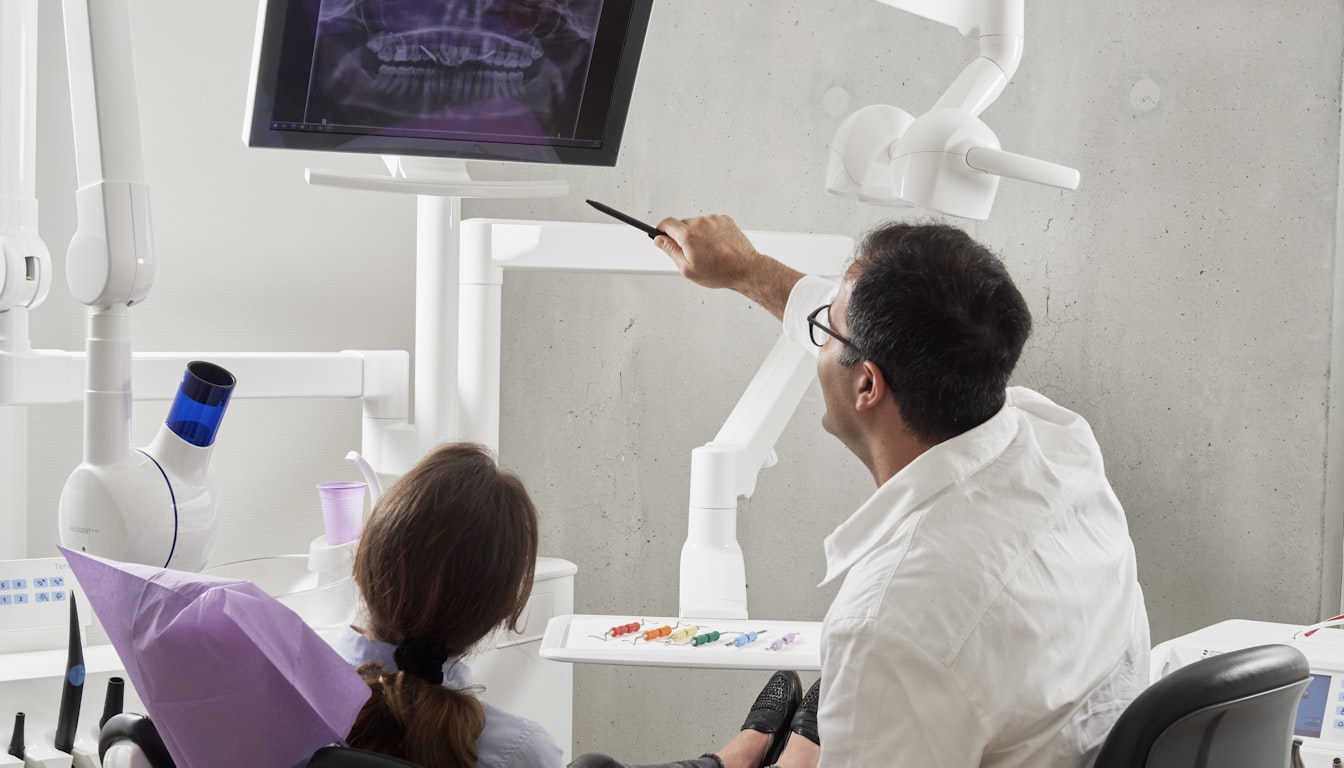
We also look at whether your gums bleed when measured, check for any gum recession, and assess how firmly your teeth are anchored. Dental X-rays let us see the level of the bone supporting your teeth, which is essential for understanding how far any disease has progressed. Together these findings give us a clear, objective picture, and they let us track your gum health over time rather than relying on guesswork.
Treatment Options for NYC Patients
The right treatment depends entirely on how advanced the disease is, which is another reason early diagnosis is so valuable. The earlier we intervene, the simpler and more comfortable the care.
For gingivitis and very early disease, a thorough professional cleaning to remove plaque and tartar, combined with coaching on your home routine, is often all that is needed. Many patients are surprised at how quickly inflamed gums calm down once the bacterial buildup is removed and daily care improves.
For established periodontitis, the cornerstone of treatment is a deep cleaning known as scaling and root planing. This is a careful, methodical cleaning that reaches below the gumline to remove tartar and bacteria from the tooth roots, then smooths the root surfaces so the gums can reattach. It is typically done with local anesthesia to keep you comfortable, and it is one of the most effective non-surgical tools we have.
After deep cleaning, many patients move onto a schedule of periodontal maintenance cleanings, usually every three to four months rather than the standard six. These more frequent visits keep bacteria from rebuilding in the pockets and are one of the single most important factors in keeping the disease stable long term.
In more advanced cases, additional treatments may be recommended, ranging from locally placed antibiotics to periodontal surgery that reduces pocket depth or regenerates lost tissue. When disease is extensive, we may coordinate your care with a periodontist, a specialist in gum health, to give you the best possible outcome. The encouraging reality is that the vast majority of patients never need to reach this point if they address the problem early.
Preventing Gum Disease in the First Place
Prevention is genuinely within your control, and it does not require anything exotic. The foundation is consistent daily care: brushing twice a day for two full minutes with a soft-bristled brush, and cleaning between your teeth every day with floss or another interdental tool. That daily flossing is the step most people skip, and it happens to be the one that reaches the spaces where gum disease most often begins.
Beyond home care, professional cleanings every six months allow us to remove the hardened tartar that brushing cannot, and to catch any early changes before they become problems. Not smoking is one of the most powerful things you can do for your gums, as tobacco use is a major risk factor for periodontal disease. Managing conditions like diabetes, eating a balanced diet, and staying hydrated all support healthy gum tissue as well.
For our patients across Midtown Manhattan and the wider NYC area, we think of prevention as a partnership. Your daily habits do the heavy lifting, and our role is to support, monitor, and fine-tune that effort so small issues never get the chance to grow.
When to See a Dentist
If your gums bleed regularly, look red or swollen, or if you have noticed bad breath that does not go away, those are clear signals to be evaluated. The same is true if you have not had a dental cleaning in more than six months, since gum disease can develop quietly in that window. And if you have a family history of gum disease or tooth loss, or you live with diabetes, it is worth being especially proactive.
The most reassuring thing about gum disease is that almost every version of it responds well to treatment, and the earlier you act, the easier that treatment is. There is no benefit to waiting, and a great deal to gain from a simple checkup.
About FORME Dental
FORME Dental is a concierge dental practice in the heart of Midtown Manhattan, where Dr. Tony Voong and Dr. Henry Fung combine modern, evidence-based care with a calm, unhurried patient experience. Periodontal health is central to how we practice, because healthy gums are the foundation for everything from a confident smile to long-term tooth retention. Whether you are due for a routine cleaning, have noticed bleeding gums, or want a thorough periodontal evaluation, our team will meet you with clear explanations and a plan tailored to you, never a one-size-fits-all approach.
You will find us at 575 Madison Avenue, Suite 1503, in Midtown Manhattan, just steps from many of the city's commuter hubs and easy to reach on a lunch break or after work. To ask a question or schedule a visit, call us at (347) 460-5603. We would be glad to help you protect your gums and your smile for years to come.
Ready to talk through your options? Explore our services or book a consultation at FORME Dental.
← Back to Journal