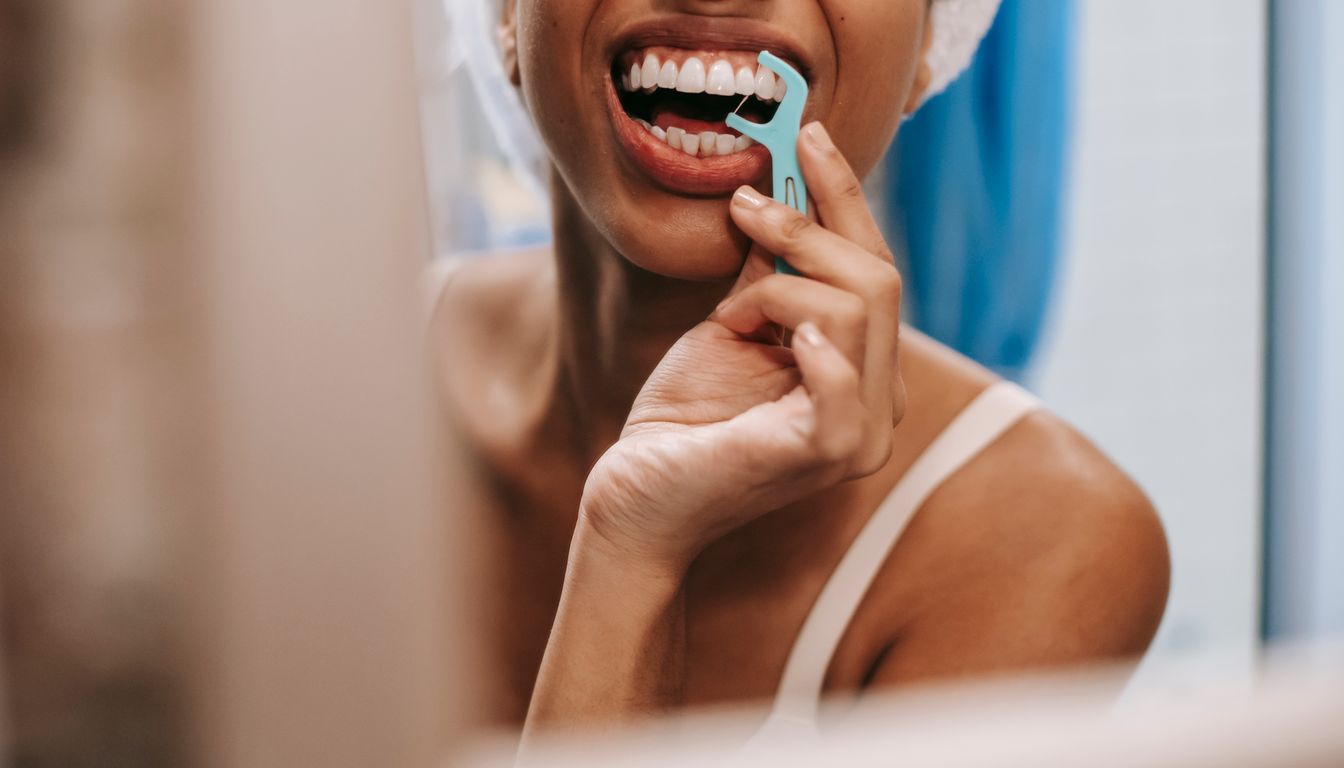
Flossing is the most skipped step in oral care, and it is also one of the most misunderstood. In my chair at FORME Dental in Midtown Manhattan, I hear the same confession almost daily: "I know I should floss more." What surprises most patients is that the problem usually is not how often they floss. It is how they floss. A few small changes in technique can do more for your gums than doubling the number of days you reach for the string.
If you have ever wondered whether you are doing it right, whether you even need to bother, or why your gums bleed when you do, this guide is for you. Let us walk through what flossing actually accomplishes, the step-by-step method I teach my own patients, and the mistakes that quietly undo all your good intentions.
Why Flossing Matters More Than You Think
Your toothbrush is a fantastic tool, but it has a blind spot. Bristles clean the broad front, back, and chewing surfaces of your teeth, which adds up to roughly three of the five surfaces on each tooth. The two remaining surfaces are the tight spaces where neighboring teeth touch. That is precisely where food gets trapped, where plaque loves to settle, and where most cavities between teeth begin.
Plaque is a sticky film of bacteria that forms continuously throughout the day. Left in those tight contacts, it hardens into tartar within 24 to 48 hours. Once tartar forms, no amount of brushing or flossing removes it. Only a professional cleaning can. This is the real reason flossing is a daily habit rather than an occasional one. You are trying to disrupt plaque before it has a chance to set.
There is a bigger picture, too. The earliest stage of gum disease, called gingivitis, shows up first in those same spaces between the teeth. Healthy flossing keeps that inflammation at bay, and a growing body of research links healthy gums to better outcomes for heart health, blood sugar control, and even pregnancy. Flossing is a two-minute habit with a surprisingly long reach.
How Often Should You Really Floss?
Once a day. That is the honest answer, and it is the one supported by the American Dental Association. You do not earn extra credit for flossing after every meal, and flossing five times a day will not make your gums healthier than flossing once. What matters is consistency and thoroughness, not frequency.
The timing is up to you. Some patients swear by flossing in the morning; others prefer the evening. I gently nudge people toward nighttime, because it clears away the day's accumulated debris before the long stretch of sleep, when your mouth produces less saliva and bacteria have the run of the place. But a morning flosser who is consistent will always beat a nighttime flosser who only manages it twice a week. The best time to floss is the time you will actually do it.
The Step-by-Step Technique
Here is the method I demonstrate for patients, and it is worth slowing down the first few times until it becomes second nature.
Start with enough floss. Pull off about 18 inches, roughly the length from your fingertips to your elbow. Wind most of it around the middle finger of one hand and a little around the same finger of the other. This lets you spool to a fresh, clean section as you move from tooth to tooth, so you are not dragging the same bacteria around your whole mouth.
Hold it taut. Pinch an inch or two of floss between your thumbs and index fingers. A short, tight span gives you far more control than a long, floppy one.
Ease it in gently. Guide the floss between two teeth with a soft back-and-forth sawing motion. Never snap it straight down. Snapping is the single most common mistake I see, and it bruises the delicate triangle of gum tissue between your teeth.
Make a C-shape. This is the step almost everyone misses. When the floss reaches the gumline, curve it into a C against the side of one tooth and hug that curve. Slide it gently up and down, going just slightly below the gumline where plaque hides. Then reverse the C against the neighboring tooth and repeat. Each gap has two surfaces to clean, not one.
Advance to a clean section. Unspool a fresh inch of floss and move to the next gap. Work methodically around your mouth so you do not skip the hard-to-reach back teeth, which are the ones that need it most.
The whole routine should take two to three minutes. If you are finishing in thirty seconds, you are almost certainly moving too fast to be thorough.
Common Flossing Mistakes
Even committed flossers tend to fall into a few traps. Sawing straight down into the gums tops the list. The goal is to clean the sides of the teeth, not to jab the tissue between them. Skipping the back teeth is another, since they are awkward to reach but trap the most debris. Reusing the same dirty segment for every tooth simply relocates bacteria rather than removing it.
Then there is the most self-defeating mistake of all: quitting because your gums bleed. Many people see a little pink in the sink, assume they are causing harm, and stop. In reality, bleeding is usually a sign of the very inflammation flossing is meant to fix. For most patients, gums that bleed during the first week of consistent flossing settle down and stop bleeding within one to two weeks. If bleeding persists beyond that, it is worth a conversation with your dentist, because it can point to a deeper issue.
String Floss, Picks, or a Water Flosser?
Patients in New York City have more options than ever, and they often ask me which is best. The truth is that the best interdental cleaner is the one you will use every day.
Traditional string floss remains the gold standard for control. It conforms to the curve of each tooth and reaches just under the gumline better than almost anything else. Waxed floss slides more easily through tight contacts, which is helpful if your floss tends to shred or catch.
Floss picks are convenient and far better than not flossing at all, especially when you are traveling or short on time. Their limitation is that the small, fixed span of floss cannot wrap into a proper C-shape, so they clean the contact point well but the gumline less completely.
Water flossers are excellent for specific situations. If you wear braces, have bridges or implants, or have larger gaps between your teeth, a water flosser can flush out debris that string struggles to reach. For patients with dexterity challenges or arthritis, they can be a game changer. For most people with healthy, tight contacts, I suggest using a water flosser alongside string floss rather than as a full replacement, since the physical scrubbing of string still does something the water cannot.
What If Flossing Is Genuinely Difficult?
Some people have a real, physical reason that flossing is a struggle. Tightly crowded teeth can make string nearly impossible to pass. Existing dental work, sensitive gums, or limited hand mobility all change the equation. If this sounds like you, please do not simply give up. Tell your dentist. We can recommend the right tools, demonstrate a technique suited to your mouth, and sometimes identify an underlying issue, such as severe crowding, that is worth addressing for both comfort and long-term health.
This is also where a professional cleaning earns its keep. Even the most diligent flosser cannot remove tartar that has already hardened. The twice-yearly visit is the safety net beneath your daily habit, not a substitute for it.
Building the Habit for Good
If flossing has never quite stuck, anchor it to something you already do without fail. Keep the floss right next to your toothbrush so it is impossible to forget. Floss before you brush, so the fluoride in your toothpaste can reach the spaces you just opened up. And give yourself grace on the days you miss. A habit you return to is far more valuable than a perfect streak you abandon after one slip.
Most of my patients are genuinely surprised by how quickly their gums respond. Within a couple of weeks of consistent, proper flossing, the bleeding stops, the puffiness fades, and that fresh, clean feeling between the teeth becomes something you actually look forward to. Your future self, and your hygienist, will thank you.
Flossing Support at FORME Dental in Midtown Manhattan
At FORME Dental, we believe great oral health is built on simple habits done well, and we are happy to spend the time showing you exactly how. During your visit, our team will assess your gum health, demonstrate a flossing technique tailored to your mouth, and recommend the right tools for your needs, whether that is waxed floss, a water flosser, or something in between. No judgment, just practical guidance that fits your life in the city.
You will find us at 575 Madison Avenue, Suite 1503, in the heart of Midtown Manhattan, a convenient stop whether you are coming from the office or on your way home. To ask a question or schedule a cleaning, call us at (347) 460-5603. Whether it has been six months or six years since your last visit, we would love to help you build a healthier, more confident smile.
Ready to talk through your options? Explore our services or book a consultation at FORME Dental.
← Back to Journal