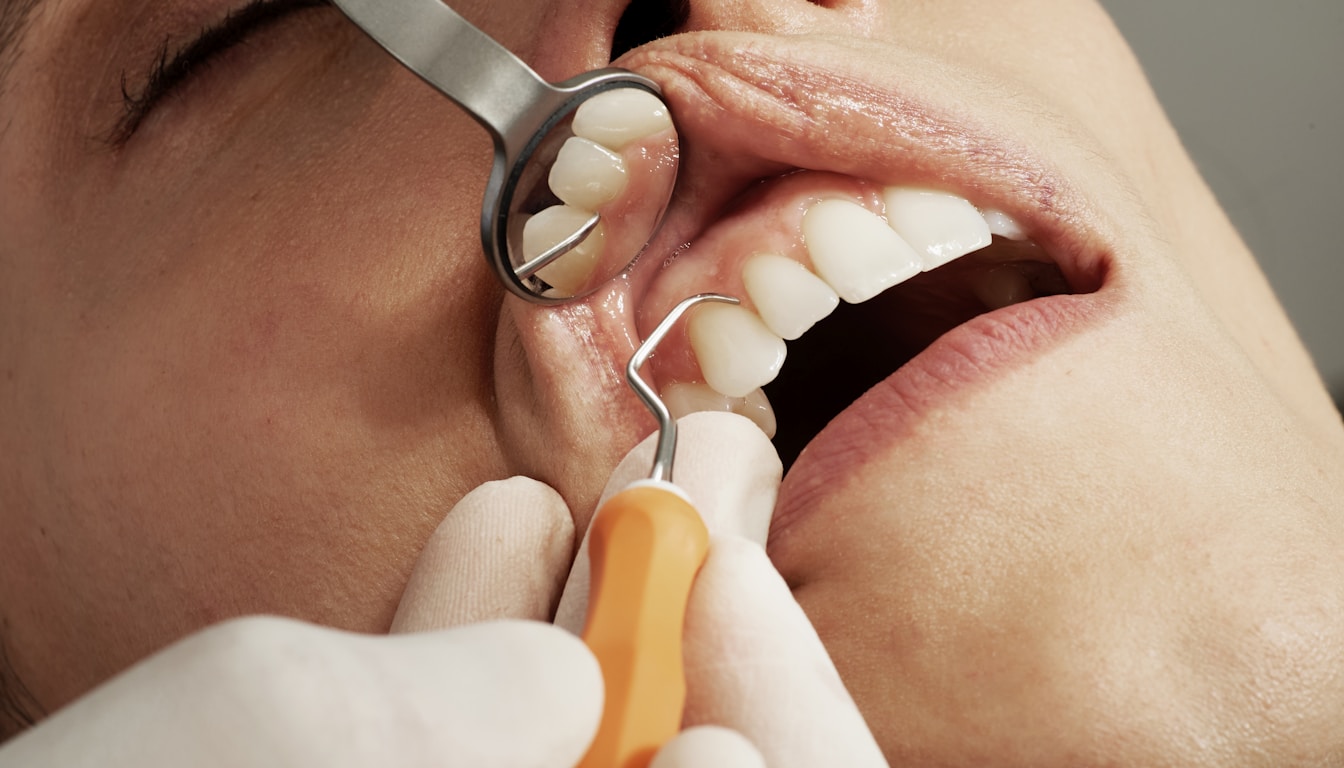
Few dental topics come loaded with more dread than wisdom teeth. You hear stories from friends, see chipmunk-cheek recovery videos online, and quietly hope yours will simply behave themselves. Sometimes they do. Often, they don't. If you live or work in Midtown Manhattan and your dentist has mentioned the words "third molars," this guide will walk you through everything you actually need to know — without the fear, the jargon, or the guesswork.
At FORME Dental, we evaluate wisdom teeth every week for patients across NYC. Some need removal sooner rather than later. Some can be safely watched for years. The right answer depends on the specifics of your mouth, not a blanket rule. Here's how we think about it, what the procedure really involves in 2026, and what recovery looks like when it's done well.
What Are Wisdom Teeth, Really?
Wisdom teeth are your third set of molars — the very back teeth on the top and bottom of each side of your mouth. Most people have four of them, though some are born with fewer (and a lucky few have none at all). They typically begin to push through between the ages of 17 and 25, which is why they earned the nickname "wisdom" teeth: they arrive around the age people are supposed to start getting wise.
The trouble is, the human jaw has gotten smaller over evolutionary time, while our wisdom teeth haven't received the memo. For many adults, there simply isn't enough room at the back of the mouth for these latecomers to erupt cleanly. The result can be impaction, crowding, infection, decay, or pressure on the neighboring molars. That's where the conversation about removal usually begins.
Signs You Might Need Your Wisdom Teeth Removed
Not every wisdom tooth needs to come out. But certain symptoms are red flags that warrant a closer look. The most common ones we hear from patients walking into our Midtown Manhattan office include:
Persistent pain or pressure at the back of the jaw. A dull ache that comes and goes, especially when chewing or opening wide, often signals a wisdom tooth trying to push into space it doesn't have.
Swelling or tenderness in the gums. When a wisdom tooth only partially erupts, a flap of gum tissue can form over it. Food and bacteria slip underneath, leading to an infection called pericoronitis — uncomfortable, recurring, and frustratingly hard to clean.
Recurring headaches or jaw stiffness. Pressure from impacted molars can radiate into the temples and TMJ. Patients are often surprised to learn their morning headaches trace back to crowded third molars.
Bad breath or an unpleasant taste. Trapped debris and bacteria around a partially erupted wisdom tooth can produce a persistent bad taste that no amount of mouthwash will fix.
Crowding or shifting of front teeth. While this is more debated in modern dentistry, in some patients the slow pressure from emerging wisdom teeth contributes to alignment changes — particularly after orthodontic work.
Even without symptoms, a dentist may recommend extraction based on X-ray findings — for example, if a tooth is positioned in a way that's likely to cause problems in the future, or if a cyst has formed around the root.
Do All Wisdom Teeth Have to Come Out?
This is the question we get asked most. The honest answer: no. If your wisdom teeth have erupted fully, sit in correct alignment with your bite, and you can clean them properly, they may never give you trouble. Plenty of people keep theirs for life.
What we look for during an evaluation includes the angle of eruption, the amount of available space, the health of the gum tissue around the tooth, and whether the position makes the tooth essentially impossible to brush and floss adequately. A clean, healthy, well-positioned wisdom tooth is a keeper. A tilted, half-buried, decay-prone one rarely is.
For NYC patients in their late teens and early twenties, we often recommend a panoramic X-ray as a baseline so we can monitor things over time. It's much easier — and recovery is much faster — to remove a problematic wisdom tooth at 19 than at 49.
What Happens During the Procedure
Modern wisdom tooth extraction is a far cry from the experience your parents may have described. Today's protocols are designed around precision, minimal trauma, and a patient experience that prioritizes comfort.
Before the appointment, we review your X-rays, talk through your medical history, and discuss the type of sedation that fits your situation. Options usually include local anesthesia (numbing the area only), nitrous oxide for relaxation, oral sedation, or IV sedation for more complex cases or anxious patients. Many simple extractions in NYC are handled comfortably with local anesthesia alone.
For a fully erupted wisdom tooth, the procedure is similar to any other extraction — the area is numbed, the tooth is gently loosened, and it's removed. For an impacted tooth, the dentist or oral surgeon makes a small incision in the gum, sometimes removes a small amount of bone, and may divide the tooth into sections to lift it out without disturbing the surrounding tissues. Stitches may or may not be used depending on the case.
Most appointments to remove a single wisdom tooth take around 20 to 40 minutes from start to finish. A full four-tooth extraction usually runs about an hour. Patients are then walked through aftercare instructions and sent home to rest.
What Recovery Actually Looks Like
Recovery is where most of the internet anxiety lives — and where setting accurate expectations matters most. Here's an honest breakdown.
The first 24 hours. Expect some bleeding, swelling, and stiffness. You'll bite on gauze for the first hour or two to help a blood clot form in the socket. Stick to soft, cool foods: smoothies, yogurt, applesauce, lukewarm soup. Avoid using a straw, spitting forcefully, smoking, or rinsing aggressively — all of which can dislodge the clot and lead to a painful complication called dry socket.
Days 2 to 3. Swelling typically peaks. Ice packs in 20-minute intervals on the cheek can help. Most patients manage discomfort with over-the-counter ibuprofen and acetaminophen alternated on a schedule, with prescription medication reserved for more complex extractions. Many of our NYC patients are back to office work, remote calls, or running quiet errands by day three.
Days 4 to 7. Swelling subsides. Soft foods are still kindest to your sockets, but most people transition back toward a normal diet. You may notice mild bruising fading on the cheek or jawline. Gentle saltwater rinses begin around day two or three to keep things clean.
Weeks 2 to 4. The gum tissue closes and the bone underneath continues to fill in over several months. Most patients feel fully back to normal within two to three weeks, though full bone remodeling takes longer behind the scenes.
A few practical tips we share with every patient: keep your head slightly elevated when sleeping for the first few nights, stay hydrated, avoid strenuous workouts for at least 48 hours, and don't underestimate how much soft, cool food and rest will help your body do its job.
What Wisdom Tooth Removal Costs in NYC
Cost is one of the most common pre-appointment questions, and the answer depends on a few real variables: how many teeth are being removed, whether they're erupted or impacted, the type of sedation used, and whether you're seeing a general dentist or an oral surgeon.
As a general range for the New York City market in 2026, a simple extraction of a fully erupted wisdom tooth typically falls in the lower range, while removal of a fully impacted tooth requiring incision and sectioning runs noticeably higher. Sedation beyond local anesthesia adds to the cost. Many dental insurance plans cover at least a portion of medically necessary extractions, particularly when impaction or infection is documented.
At FORME Dental, we always provide a clear written estimate before treatment so you know exactly what your portion will be. If you don't have dental insurance, we'll walk you through payment options and help you understand what's truly necessary versus what could wait.
Risks and How We Minimize Them
Like any procedure, wisdom tooth extraction carries some risks, though serious complications are rare in healthy patients. The most common minor issues include swelling, bruising, and temporary jaw stiffness — all expected parts of healing.
Dry socket, mentioned earlier, occurs when the protective clot is lost too early. It's uncomfortable but treatable. The most reliable way to prevent it is to follow your aftercare instructions carefully during the first 72 hours.
Nerve sensitivity is a small risk with lower wisdom teeth that sit close to a major nerve in the jaw. We screen for this with 3D imaging when the X-rays suggest the roots are in tight quarters with the nerve, and we plan extractions accordingly. This is one of the biggest advantages of having a careful, thorough evaluation rather than a one-size-fits-all approach.
Why Earlier Is Often Easier
If wisdom teeth are going to cause problems, they almost always do so eventually. The reason most oral health professionals lean toward earlier removal (when removal is clearly indicated) is straightforward: younger patients tend to have softer bone, less developed roots, and faster healing capacity. A wisdom tooth extraction at 22 is typically a different experience than the same extraction at 45.
That said, age alone is never the reason to remove a tooth. Older patients who've never had trouble with their wisdom teeth can absolutely keep them. The decision should always be made tooth by tooth, based on real evidence rather than a calendar.
What Makes a Good NYC Wisdom Teeth Experience
The right office matters. In a city full of options, the differences come down to a few things: how thoroughly your case is evaluated, how clearly the plan is explained, how comfortable the actual appointment is, and how present your dentist is afterward if anything feels off.
At FORME Dental, we take the time to look at the full picture — your symptoms, your X-rays, your goals, and your schedule. For Midtown Manhattan patients who can't afford to disappear from work for a week, we plan extractions with that reality in mind. We talk through sedation options openly, walk you through aftercare in plain language, and we're easy to reach in the days that follow.
About FORME Dental
FORME Dental is a modern dental practice located in the heart of Midtown Manhattan, dedicated to thoughtful, judgment-free care for adults navigating busy New York lives. Whether you're scheduling a routine evaluation, weighing whether your wisdom teeth need to come out, or just want a second opinion before you commit to anything, we're here to help you make a clear, informed choice.
You can find us at 575 Madison Avenue, Suite 1503, Midtown Manhattan. To schedule a consultation or speak with our team, call (347) 460-5603. We'll take the time to answer your questions, review your X-rays, and walk you through what makes sense for your mouth — and only your mouth.
Ready to talk through your options? Explore our services or book a consultation at FORME Dental.
← Back to Journal